
Thermally Broken Aluminum Patio Doors: Conejo Valley Guide
Are thermally broken aluminum patio doors worth it in Thousand Oaks? For most homes here, yes. A thermal break is an insulating strip inside the aluminum frame that slows heat moving through the metal, so the door stays cooler in Conejo Valley summers and less chilly on clear winter nights, while keeping aluminum’s slim, strong profile.
The short version
- Plain aluminum conducts heat easily, so a non-broken frame can feel hot in summer and cold at night.
- A thermal break separates the inner and outer frame with a less conductive material, which slows that heat transfer.
- Thermally broken aluminum keeps the narrow frames and strength that suit wide sliding, folding and French openings.
- The frame is only part of the picture, because glass, seals and installation also shape how a patio door performs.
- Many older Thousand Oaks homes still have original aluminum sliders without a thermal break, and replacing them is a common upgrade.
Choosing a patio door can feel like a lot of technical decisions at once. That’s normal. This guide compares three common frame approaches side by side, so you can take it step by step and match the door to how your home actually lives through the year.
Standard aluminum frames: slim and sturdy, but conductive
A standard aluminum patio door uses a continuous metal frame, which is strong and slim but lets heat pass straight through. Aluminum is one of the most conductive common building metals, so whatever temperature the outside face reaches tends to travel to the inside face.
On a hot inland afternoon, a sunny west-facing slider can make the frame warm to the touch indoors. On a cool, clear night the reverse happens. The inside edge of the frame gets cold, and moisture in the room can bead up along it as condensation. If that sounds familiar, our guide on why older aluminum doors heat up so much walks through the physics in plain terms.
Standard aluminum still has real strengths. It’s rigid, it resists warping, and it allows thin sightlines with lots of glass. Its weak point is purely thermal. That’s the gap a thermal break is designed to close.
How thermally broken aluminum patio doors work
A thermally broken frame splits the aluminum into an inner and outer section joined by a less conductive material, usually a structural polymer strip. Heat has to cross that barrier to get from one side to the other, and it crosses it slowly.
The result is an inside frame surface that stays closer to room temperature. In practice that can mean a frame that feels less hot on summer afternoons, less cold at night, and less prone to condensation along the interior edge. The outside still looks like aluminum. The inside behaves more calmly.
What you keep matters as much as what you gain. Thermally broken frames retain aluminum’s strength, so they can carry large glass panels and support wide multi-panel systems, including folding and sliding configurations. That’s a big reason they show up so often in modern indoor-outdoor designs.
Why the glass still matters
The frame is one piece of the efficiency puzzle, and the glass is often the larger piece by area. Dual-pane insulated glass and low-emissivity (low-E) coatings help limit solar heat gain through the panes themselves. A thermally broken frame paired with single-pane glass would leave much of the benefit on the table. When comparing doors, look at the whole unit’s ratings, not just the frame description.
Seals and installation round it out
Weatherstripping, the threshold, and how the door is set into the opening all affect air leakage. A well-made frame installed out of square can still let drafts through. It’s worth asking how the opening will be prepared and sealed. Small details count here.
Vinyl frames: an insulating alternative with trade-offs
Vinyl patio door frames insulate well on their own because the material conducts heat poorly, but they are usually bulkier and less rigid than aluminum. That makes vinyl a reasonable choice for standard-size sliders where wide panels aren’t the goal.
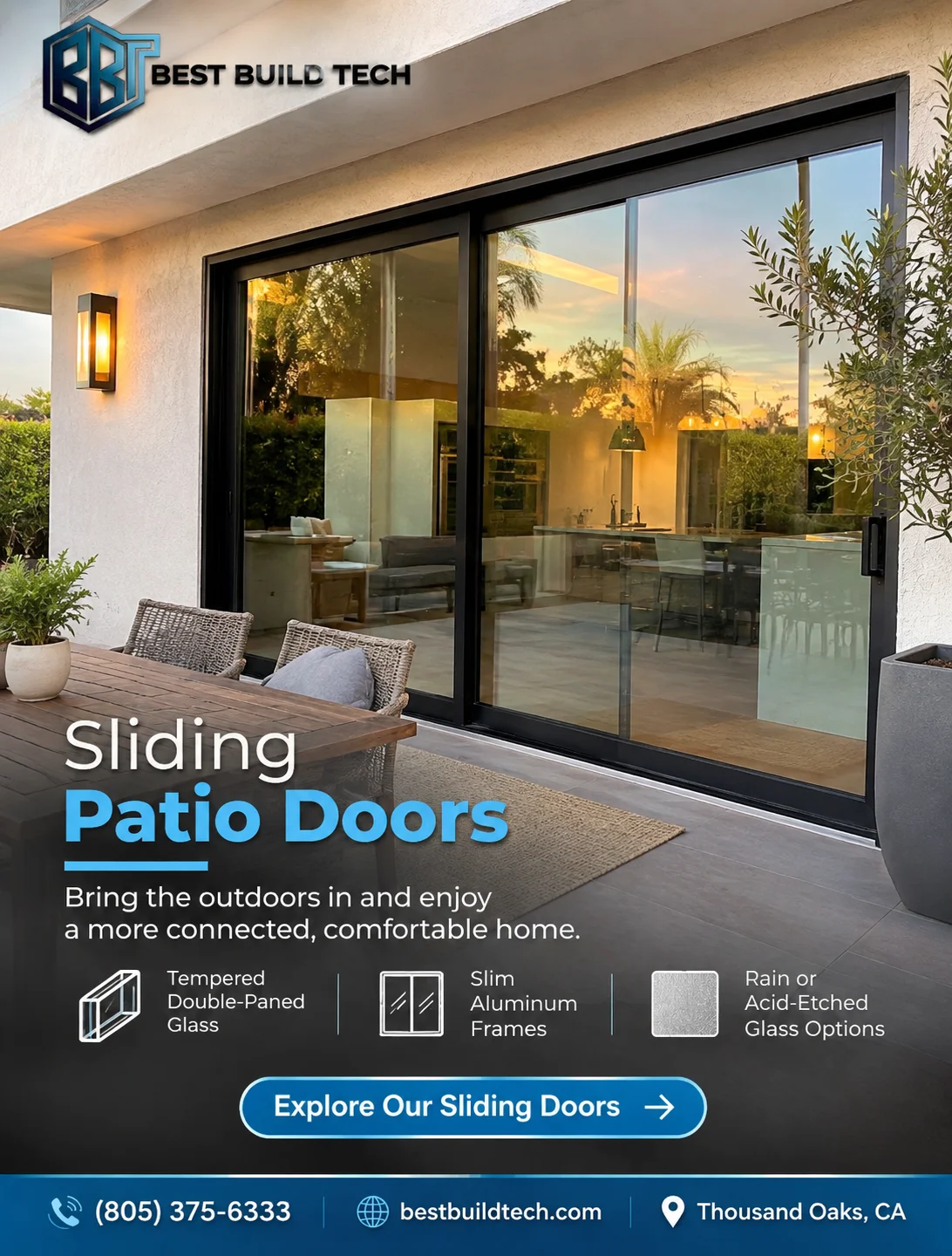
The trade-offs show up in size and style. Vinyl frames often need thicker profiles to stay stiff, which means less glass and wider sightlines. Very large openings and multi-panel folding systems are harder to achieve in vinyl. Dark vinyl colors can also be sensitive to strong sun exposure, which is worth considering on south- and west-facing walls.
Vinyl isn’t wrong. It simply solves the heat problem by changing the material, while thermally broken aluminum solves it by changing the frame design.
Thermal break vs non thermal patio door: side by side
The clearest way to choose is to compare the options on the qualities that affect daily comfort and the look of your opening. The table below sums up the general differences discussed above.
| Criteria | Standard aluminum | Thermally broken aluminum | Vinyl |
|---|---|---|---|
| Heat transfer through the frame | High; frame passes heat readily | Reduced by the insulating barrier | Low; material insulates on its own |
| Interior condensation risk on cool nights | Higher along the frame | Lower | Lower |
| Frame profile and sightlines | Very slim | Slim | Typically wider |
| Suitability for large or multi-panel openings | Strong | Strong | More limited |
| Resistance to warping in strong sun | High | High | Can vary with color and exposure |
| Fit for folding, sliding and French styles | All three | All three | Mostly sliding and hinged |
Notice the pattern. Thermally broken aluminum is the only column that pairs slim, strong frames with reduced heat transfer.
Which is right for Thousand Oaks homes
For most Thousand Oaks homes that want wide glass and real comfort through hot summers and cool nights, thermally broken aluminum is the most balanced choice. It keeps the open, light-filled look that suits the region’s indoor-outdoor living, without the hot-and-cold frame of older aluminum.
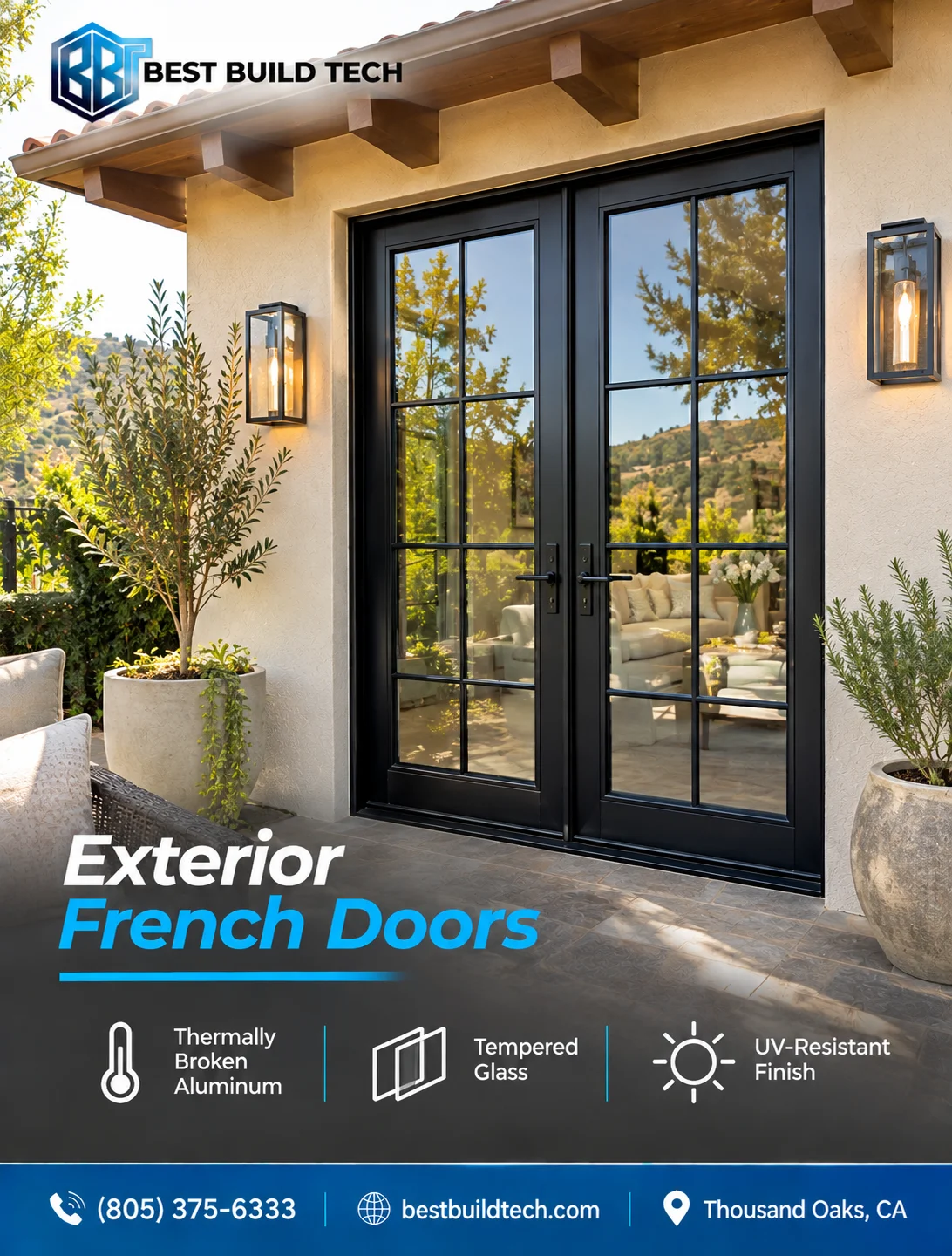
Standard aluminum still makes sense in limited cases, such as a shaded opening into an unconditioned space like a garage workshop or a covered sunroom where comfort matters less. Vinyl can fit a modest, standard-size slider on a budget-conscious project where slim frames aren’t a priority.
If you’re unsure what you have now, our checklist of clues that your current door has no thermal break can help you tell in a few minutes. Hot frames, cold edges and morning condensation are the usual hints. Nothing unusual, and easy to spot once you know where to look.
Style matters too. Folding systems open an entire wall, while sliders keep panels in a fixed track. Our comparison of folding versus sliding layouts for local patios covers how each one uses space. If replacement isn’t on the table yet, there are also practical ways to improve an existing aluminum door in the meantime.
Have a specific opening in mind? You’re welcome to contact Best Build Tech in Thousand Oaks with its measurements and orientation, and talk it through.
Frequently Asked Questions about thermally broken aluminum patio doors
Do you lose heat through patio doors?
Yes, patio doors are a common path for heat loss and heat gain because they combine large glass areas with frames and seals. Non-thermally broken aluminum frames add to this by conducting heat directly, while thermally broken frames, insulated glass and good seals help slow it down.
Who makes the best quality sliding glass doors?
No single maker is the right answer for every home, so it’s more useful to judge the door itself. Look for a thermally broken or otherwise insulating frame, dual-pane low-E glass, sturdy rollers and track, quality weatherstripping, and published performance ratings for the whole unit.
Do they still make aluminum windows?
Yes, aluminum windows are still widely made, and many current versions use thermally broken frames to reduce heat transfer. That lets them keep aluminum’s slim profile while performing far better than the older, non-broken frames found in many existing homes.
What are the different types of aluminum doors?
Common aluminum patio door types include sliding doors, folding (bi-fold) doors that stack to open a wide span, and hinged French doors. Each can be made with standard or thermally broken frames, and the thermally broken versions are generally the better fit where comfort and efficiency matter.
What makes the Conejo Valley different
Thousand Oaks sits inland from the coast, so it tends to see hotter summer afternoons than beach towns and noticeably cooler nights, especially in fall and winter when clear skies let temperatures drop after sunset. Dry Santa Ana wind events can also bring sudden warm, gusty days. That daily swing is exactly where a frame that slows heat transfer earns its keep.
Much of the local housing stock dates from the decades when plain aluminum sliders were standard, so original non-broken frames are common in older neighborhoods. California also has statewide energy standards for buildings (Title 24), and requirements for replacement doors can depend on the project, so it’s wise to check current rules with your local building department or a licensed professional before work begins.
When you’re ready to compare options for your own opening, talk with Best Build Tech about your patio door project and take the next step at your own pace.