
Folding vs Sliding Aluminum Patio Doors in Thousand Oaks
When you weigh folding vs sliding aluminum patio doors in Thousand Oaks, pick folding if you want the whole opening clear for indoor-outdoor living, and sliding if you want simple operation, fewer moving parts and big glass views. A standard two-panel slider opens only about half its width. These seven steps help you decide.
It’s common to feel stuck between the two. Both look clean in aluminum, both suit Conejo Valley patios, and both can be built with thermal breaks. The difference comes down to how you live in the space. Take it step by step and the right fit usually becomes clear.
Before you start
Gather a few things first. None of them need tools beyond a tape measure.
- A tape measure and a notepad (or your phone’s notes app)
- Rough width and height of the existing opening, inside and out
- A sense of which direction the patio faces (a compass app works)
- Notes on furniture, planters, steps or railings near the door
- A list of how you use the patio: dining, kids, pets, entertaining, quiet mornings
- Any HOA guidelines that apply to exterior changes in your neighborhood
Step 1: Decide how much of the opening you need open
Start with the single biggest difference between the two styles. A folding door, sometimes called a bifold, has panels that hinge together and stack to one or both sides, so nearly the entire opening clears. A sliding door has panels that glide past one another on a track, which means part of the opening always holds a stacked panel. If you picture the room and the patio becoming one space for gatherings, folding leans ahead. If you mostly walk in and out and want the view while the door is shut, sliding often does the job with less fuss. Write down which picture matches your week, not your best party of the year.
Step 2: Measure the opening and the clearance around it
Measure the opening’s width and height, then look at what sits on either side. Folding panels need space where they stack, and outswing folding doors need clear patio floor for the panels to swing out. Sliding doors need no swing room at all, which is why they’re nothing unusual in tight spots near railings or built-in seating. Note anything within a few feet of the door that would block a stack or a swing.
- Wider openings give folding doors room to show off their full-width opening.
- Narrow or crowded openings often favor a slider.
- Check ceiling height and any beam above the header, since it affects panel height options.
Step 3: Map your patio’s sun and wind exposure in Thousand Oaks
This is the step where Thousand Oaks really shapes the choice. Summers in the Conejo Valley are hot and dry, and a west- or south-facing patio can take direct afternoon sun for hours, so the glass and frame on that wall work hard. Fall brings Santa Ana wind events that push dust and grit across patios and into door tracks. Much of the local housing stock in neighborhoods like Newbury Park, North Ranch and the older ranch-style tracts dates from the 1960s through the 1980s, and many of those homes still have original aluminum sliders without thermal breaks. Hillside lots add their own wrinkle, with patios that catch wind and full sun at once.
Here’s how that plays out between the two styles. A slider usually has fewer, larger glass panels and fewer frame joints, so there’s less frame to manage and fewer seals. A folding door has more vertical frame members and more seals between panels, which matters on a sun-baked wall. Either way, the frame material makes a real difference, and it helps to understand how thermally broken frames limit patio door heat gain before you compare models. If your current door already feels warm to the touch on summer afternoons, the explainer on why older aluminum doors heat up walks through the cause.
Jot down your exposure. It narrows things quickly.
Step 4: Compare heat and drafts in folding vs sliding aluminum patio doors
Look at the parts that move heat, not just the style name. Heat travels through glass and through the metal frame, and in plain aluminum the frame can carry outdoor temperature straight inside. A thermal break is an insulating barrier built into the frame that separates the outer and inner aluminum, slowing that transfer. Both folding and sliding aluminum doors can include it, so ask about the break first and the style second.
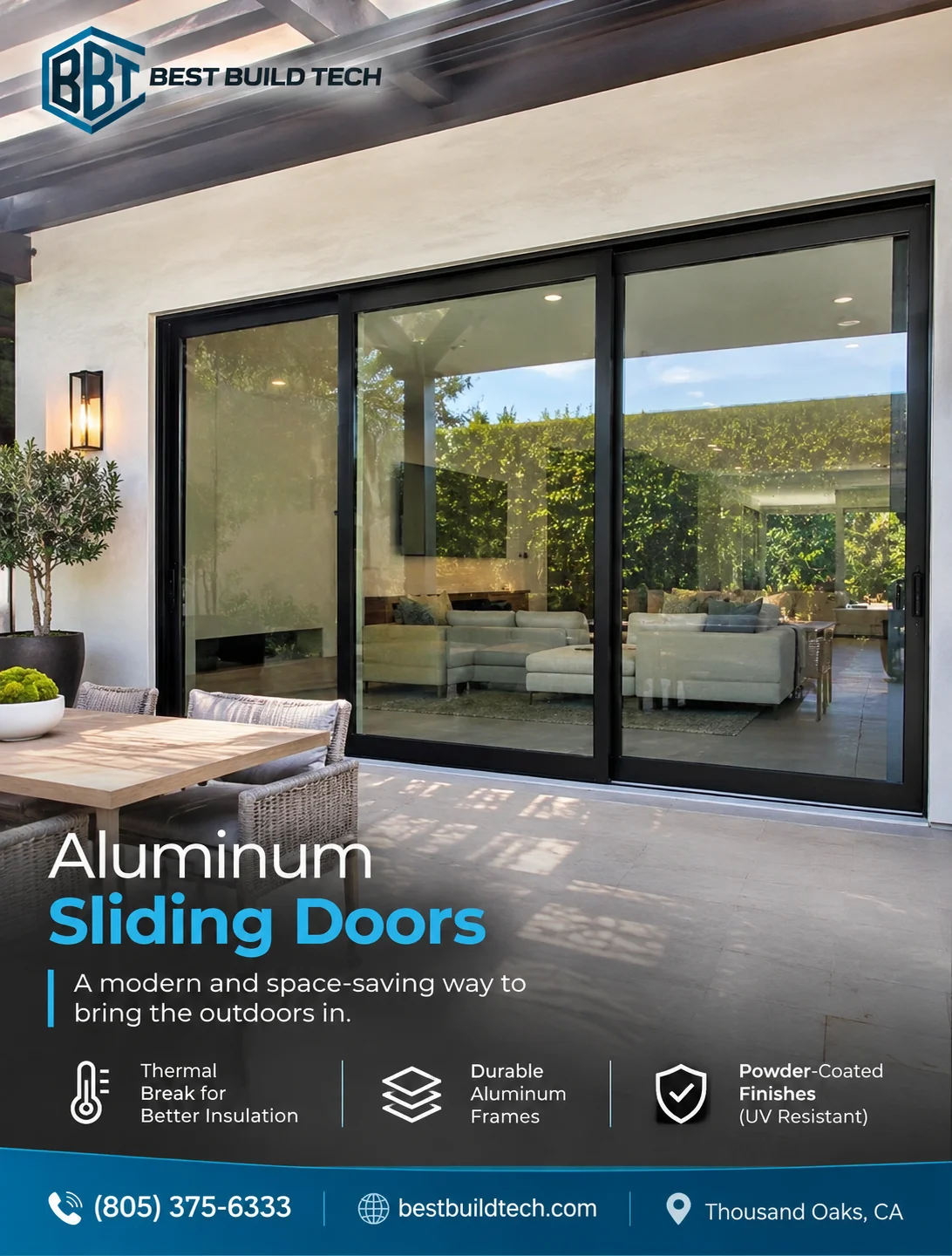
- Sliding doors: fewer seals, but the interlock where panels meet and the bottom track are common spots for drafts as weatherstripping ages.
- Folding doors: more seals between panels, so seal quality and adjustment matter more over time.
- Glass: insulated, low-emissivity glass helps either style on a sunny wall.
The U.S. Department of Energy’s guidance on windows and glazing covers how frames and glass affect heat gain, and it applies to glass doors too. For a closer look at the comparison, see what a thermally broken aluminum patio door does in Conejo Valley heat.
Step 5: Think about daily use, cleaning and upkeep
Picture a normal Tuesday, not a holiday. A slider opens with one hand in a second or two, and that’s hard to beat for letting the dog out. A folding door takes a little more handling to open fully, though many have a single swing panel for everyday trips. Upkeep is part of the picture too. Sliding tracks collect dust, especially after windy fall days, and a quick vacuum keeps the rollers moving. Folding doors have hinges and a track that also like a periodic wipe. Neither is demanding. You’re just choosing which small routine suits you.
Step 6: Check security, children and pets
Every household weighs this a little differently, and that’s normal. Ask how each door locks: sliders typically lock at the interlock, while folding systems often lock at multiple points along the panels. If you have small children, think about where fingers could be near folding hinges as panels close, and where a slider’s glass could be walked into when it’s shut. Pet doors and screens matter too. Ask what screen options exist for each style, since screening a wide folding opening works differently from screening a slider.
Step 7: Match the style to your home and your budget priorities
Finish by stepping back and looking at the whole house. Folding doors give a dramatic, open look that suits entertaining patios and modern remodels. Sliding doors keep a quieter, glass-forward look that suits many classic ranch homes. Cost is part of this, and it depends on width, panel count, glass type, thermal break, hardware and installation conditions rather than style alone. More panels and more hardware generally mean more cost, so compare quotes line by line for the same width and glass. If your concern is comfort more than looks, the guide to insulating aluminum patio doors explains what improves performance in either style.
By now your notes should point one way. Trust them.
When to call a professional in Thousand Oaks
Bring in a licensed professional once you’re widening an opening, changing a header or beam, or moving from a slider to a much larger folding system. Those changes can involve structural work, and permit and code requirements vary by area, so check with the City of Thousand Oaks or Ventura County and your HOA before work begins. A pro should also handle anything involving electrical runs near the opening, flashing and waterproofing on exposed walls, and leveling on older slabs, which is common in homes of this age. Accurate measuring matters too, since door systems are made to set sizes. If you want help understanding what you’re comparing, this overview of efficient aluminum patio doors for Thousand Oaks homes is a calm place to start.
Frequently Asked Questions about folding and sliding patio doors
Are folding doors less energy efficient than sliding doors?
Not necessarily. Efficiency depends mostly on the frame’s thermal break, the glass and the quality of the seals, so a well-built folding door can perform well, while a slider without a thermal break can run warm.
Do folding patio doors work on a small patio?
They can, but outswing folding panels need clear floor space when open. On a small or crowded patio, a slider or a folding system that stacks inward may be easier to live with.
Can I replace an old aluminum slider with a folding door?
Often yes, though a wider opening may require changes to the header and framing. A licensed professional can confirm what your wall allows and what permits your area requires.
Which style holds up better with Santa Ana dust?
Both handle it with simple care. Vacuuming the tracks and wiping seals after windy spells keeps either style operating smoothly.
Your next step is to bring your measurements and sun notes and talk through folding and sliding options with Best Build Tech so you can choose the door that fits how you live.