
What is the Maximum Height for an Aluminum Door?
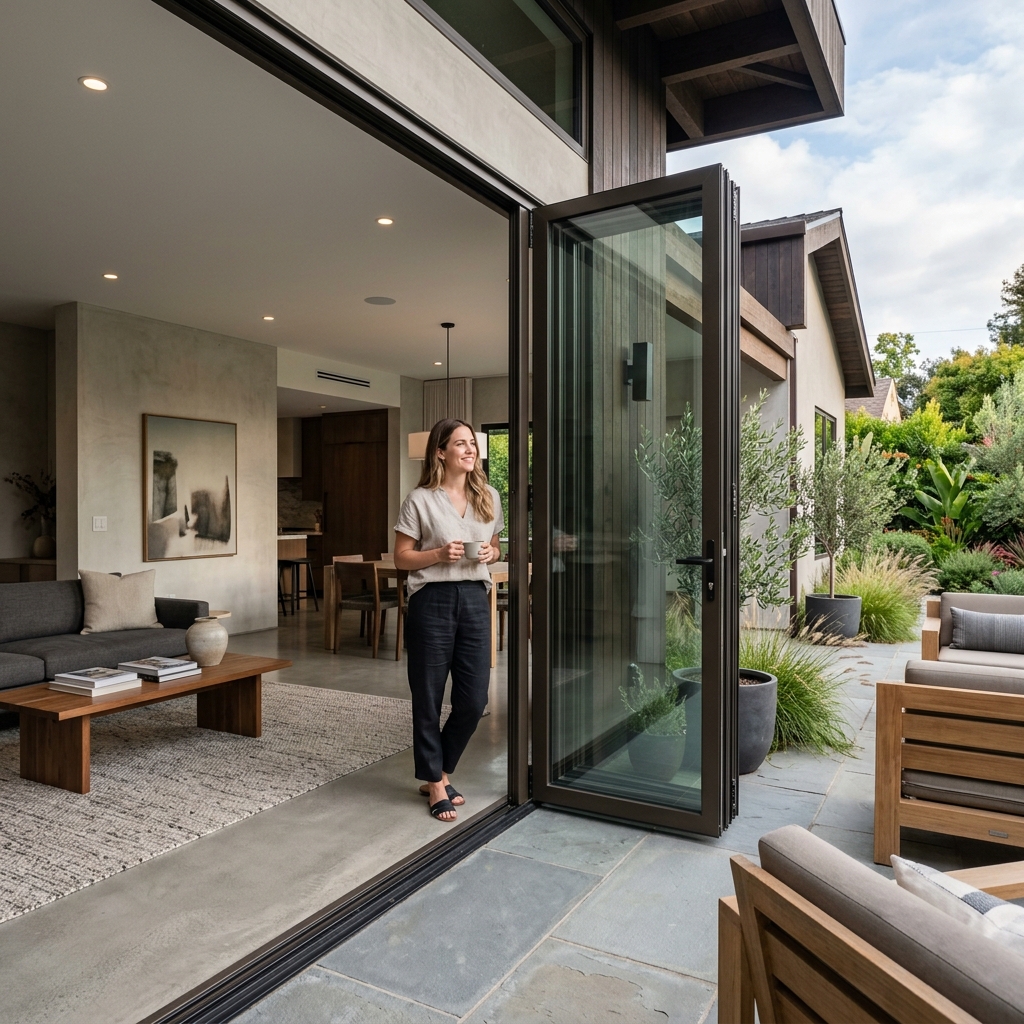
Aluminum door systems are the preferred choice for modern architecture in Thousand Oaks and Malibu specifically because they can achieve heights that would cause other materials to fail. While a standard residential door typically stands at 6 feet 8 inches or 8 feet, high-performance aluminum engineering allows for much more ambitious designs. In the luxury real estate markets of Los Angeles, it is common to see aluminum door installations reaching heights of 10, 12, or even 15 feet. However, determining the absolute maximum height for a specific project is not just about the material’s strength; it involves a complex calculation of wind load, glass weight, and the structural integrity of the surrounding building frame.
In this comprehensive guide, we will explore the mechanical limits of aluminum, how “deflection” affects tall doors, and why Southern California’s unique climate and seismic activity play a role in how high your aluminum door can safely go.
The Structural Advantage of Aluminum
To understand why an aluminum door can stand so much taller than a wood or vinyl counterpart, one must look at the strength-to-weight ratio of the metal. Wood is susceptible to warping and “bowing” when cut into long, thin lengths, especially when exposed to the temperature fluctuations of the San Fernando Valley. Vinyl lacks the internal rigidity to support the massive weight of oversized double-pane glass without significant reinforcement.
Aluminum, however, is a non-ferrous metal that can be extruded into complex, multi-chambered profiles. These profiles are designed with internal “webs” that provide immense structural rigidity. This allows the frame to remain slim while supporting a glass panel that may weigh several hundred pounds. It is this inherent stiffness that makes the aluminum door the king of the “grand entrance” in areas like Westlake Village and Hidden Hills.
Factors Defining the Maximum Height
While a factory might technically be able to extrude a 20-foot piece of aluminum, several real-world constraints limit how tall a functional aluminum door can actually be.
Wind Load and Deflection
In coastal areas like Pacific Palisades or high-wind zones in the Santa Clarita Valley, the primary limitation is wind load. When a tall door is closed, it acts like a sail. If the aluminum frame is too thin for its height, the wind can cause it to “deflect” or bend. Excessive deflection can break the weather seals, cause the glass to crack, or make the door impossible to open during a storm. Engineers use “Deflection Limits” (often expressed as L/175) to determine the maximum safe height for an aluminum door based on the local wind speeds.
Glass Weight and Hardware Capacity
The taller the door, the larger the pane of glass. A 12-foot aluminum door with 1-inch thick insulated glass is incredibly heavy. The rollers (for sliding doors) or the hinges (for swinging/folding doors) must be able to support this “dead load” without deforming. Most architectural-grade hardware is rated for specific weight limits. Once a door exceeds 10 or 12 feet, the hardware often needs to be upgraded to heavy-duty stainless steel components to ensure the door still glides with a single finger.
Thermal Expansion
Aluminum expands and contracts as it heats up. In the intense sun of Simi Valley or Woodland Hills, a 15-foot aluminum door can actually grow by several millimeters during the day. If the frame is not engineered with proper thermal breaks and expansion joints, the door could bind in the frame or “oil-can” (make popping sounds) as the metal moves.
Height Limits by Door Type
The maximum height also depends on the motion of the aluminum door.
- Sliding Doors: These typically achieve the greatest heights. Because the weight is supported by a bottom track, sliding aluminum door panels can often reach 12 to 15 feet in height.
- Pivot Doors: Because a pivot door rotates on a vertical axis, it can handle massive scale. It is not uncommon to see pivot entrances in Calabasas reaching 10 to 12 feet, though they require specialized hydraulic closers to manage the momentum of such a large moving mass.
- Bifold Doors: Folding systems are generally more limited due to the stress placed on the top-hung track. Most manufacturers recommend a maximum height of 10 to 12 feet for a bifold door to ensure the panels don’t “sway” or drag when being folded.
Q&A: Oversized Aluminum Door Engineering
Q: Do I need special permits for a door over 10 feet tall? A: In most of Los Angeles County and Ventura County, a door of this size will require a structural engineering stamp as part of your building permit. The city will want to see that your header (the beam above the door) is strong enough to support the weight and that the wind load calculations are correct for your specific neighborhood.
Q: Is a taller aluminum door less energy-efficient? A: Not necessarily. While there is more glass area for heat transfer, high-quality aluminum door systems utilize “thermal breaks”—polyamide strips that separate the inner and outer metal frames—to prevent heat from entering your home. Combined with Low-E glass, even a 12-foot door can meet California’s strict Title 24 energy standards.
Q: Can I get a 15-foot door with a screen? A: Screening an oversized opening is a challenge. For a very tall aluminum door, you would likely need a motorized retractable screen system, as standard sliding screens often become unstable at heights over 9 or 10 feet.
Q: Does the color of the aluminum affect the maximum height? A: Indirectly, yes. Dark colors (like Black or Bronze) absorb more heat, leading to more thermal expansion. In very hot climates like Sherman Oaks, an engineer might recommend a slightly shorter maximum height for dark-colored frames to account for the increased metal movement, or they may specify a “heavy-wall” extrusion for better stability.
Maintenance for Oversized Aluminum Systems
Owning a massive aluminum door in Thousand Oaks requires a proactive approach to maintenance to protect your investment.
- Track Care: For tall sliding doors, the bottom track must be kept pristine. Even a small pebble can cause a massive 12-foot panel to “jump” or put unnecessary strain on the rollers.
- Seal Inspection: The weatherstripping on a tall door has a long vertical span. Check once a year to ensure the seals haven’t “shrunk” at the top or bottom, which could allow air or water into your home.
- Hardware Lubrication: The hinges and rollers on oversized systems work harder than standard hardware. A professional-grade dry silicone lubricant should be applied annually to ensure the operation remains effortless.
Conclusion: Reaching New Architectural Heights
What is the maximum height for an aluminum door? While the answer is often “higher than you think,” it is always governed by the laws of physics and the requirements of the California Building Code. By utilizing the incredible strength of aluminum and pairing it with expert engineering, you can create a 10, 12, or even 15-foot entrance that transforms your home into a landmark of modern design. For homeowners in Thousand Oaks, Malibu, and Los Angeles, an oversized aluminum door is the ultimate way to frame the beauty of the West Coast landscape.
Master the Scale with Best Build Tech
Ready to think big? Best Build Tech specializes in the complex engineering and precision installation of oversized aluminum door systems throughout Los Angeles and Ventura County. From 12-foot sliders to grand pivot entrances, we provide the technical expertise to ensure your high-reaching vision is safe, functional, and breathtaking.
Best Build Tech 📍 2300 Corporate Center Drive, Thousand Oaks, CA 91320 📞 805-375-6333