
Should My Casement Windows Open Left or Right?
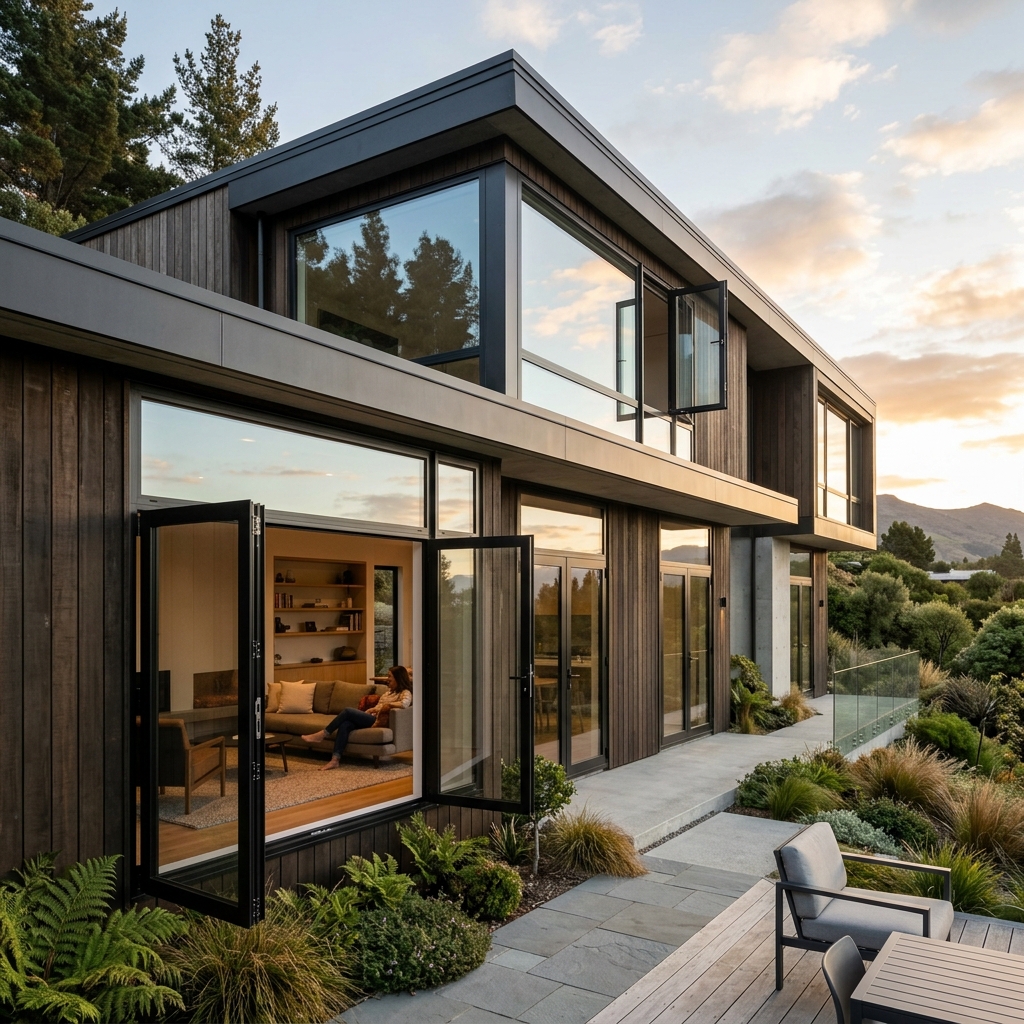
When designing a home or planning a remodel in Thousand Oaks or Westlake Village, the smallest details often lead to the most significant functional impacts. While homeowners often focus on frame material or energy efficiency, a critical mechanical question often arises: Should my casement windows open left or right? This decision—known in the industry as “handing”—affects everything from how much breeze enters your home to how easy it is to clean the glass from the inside.
Choosing the correct swing direction for your casement windows is not just about personal preference; it involves analyzing the architectural layout of your room, the prevailing winds in your Los Angeles neighborhood, and even whether you are right- or left-handed.
Understanding “Handing” in Casement Design
Before deciding on a direction, it is important to understand how manufacturers label these units. Unlike a door, where the handing is determined by the hinges, window handing is usually determined by the location of the locking handle from the interior perspective.
FCL vs. FCR
- FCL (Fold-out Casement Left): The hinges are on the left side, the handle is on the right, and the window swings open toward the left.
- FCR (Fold-out Casement Right): The hinges are on the right side, the handle is on the left, and the window swings open toward the right.
Selecting the right orientation ensures that the window doesn’t collide with exterior obstacles like downspouts, shutters, or outdoor lighting fixtures when opened.
Functional Factors: Airflow and Ergonomics
The primary advantage of casement windows over sliding or double-hung styles is their ability to act as a “scoop” for fresh air. This is particularly valuable for homes in the San Fernando Valley or Agoura Hills, where capturing a cross-breeze is essential for natural cooling.
Capturing the Prevailing Breeze
To maximize ventilation, you should orient the window so the sash opens into the wind. If the prevailing breeze in your area typically moves from west to east, a window that hinges on the east side will act as a funnel, directing the air into your living space. If you are unsure of the wind patterns in your part of Los Angeles, look at which way the trees lean or observe the wind during a typical afternoon.
Ergonomics and Interior Layout
Think about which hand you use to operate a crank. Most right-handed people find it more natural to use their right hand to turn a crank on the right side of the window (an FCR unit). Additionally, consider the furniture placement in your room. You want the handle to be easily accessible without leaning over a large sofa or desk.
Aesthetic Symmetry and Visual Flow
From an architectural standpoint, the way your casement windows swing can drastically change the “vibe” of a room.
- Pairs and Symmetry: When installing a pair of windows side-by-side, most designers in Hidden Hills or Calabasas prefer them to open like a book—hinged on the outside and opening from the center. This creates a wide, unobstructed view and a symmetrical look from the street.
- Corner Placement: If a window is placed in a corner, it should always hinge on the side closest to the corner and open toward the center of the room. This prevents the sash from being “trapped” in the corner and makes the space feel larger.
Q&A: Perfecting Your Window Handing
Q: Does the swing direction affect the security of casement windows? A: No. Whether the window swings left or right, the multi-point locking system remains the same. The structural integrity of the frame and the compression seals are identical regardless of handing.
Q: Can I change the swing direction after the window is installed? A: No. Because the frame is specifically milled for the hinges and the locking hardware, the swing direction is permanent once the unit is manufactured. This is why the planning phase with Best Build Tech is so critical.
Q: Which way should a window open if it’s above a kitchen sink? A: Most homeowners prefer the handle to be on their dominant hand side for easy reaching. However, if there is a wall to one side of the sink, hinge the window on that wall side so the sash opens toward the open space of the kitchen.
Q: Is one direction better for cleaning? A: Many modern casement windows feature “washability hinges” that create a gap between the sash and the frame when open, allowing you to clean the exterior glass from inside your home. Handing doesn’t change this, but you should ensure you have enough physical space to reach around the open sash.
Conclusion: A Decision for Comfort and Style
Should your casement windows open left or right? The “correct” answer is the one that best serves your home’s specific environment. By considering the direction of the Los Angeles breezes, the symmetry of your facade, and the ergonomics of your daily life, you turn a simple window into a high-performance ventilation tool. Whether you choose a left-hand swing for a cozy corner in Sherman Oaks or a symmetrical pair for a grand view in Thousand Oaks, the right handing ensures your home remains a sanctuary of fresh air and light.
Optimize Your Views with Best Build Tech
Not sure which way the wind blows? Best Build Tech is here to help you navigate the technical details of your window replacement. We provide expert advice on handing, hardware, and glass options for casement windows throughout Los Angeles and Ventura County. Let us help you design an opening that is perfectly balanced for your lifestyle.
Best Build Tech 📍 2300 Corporate Center Drive, Thousand Oaks, CA 91320 📞 805-375-6333