
French Doors 101: What Actually Sets Them Apart
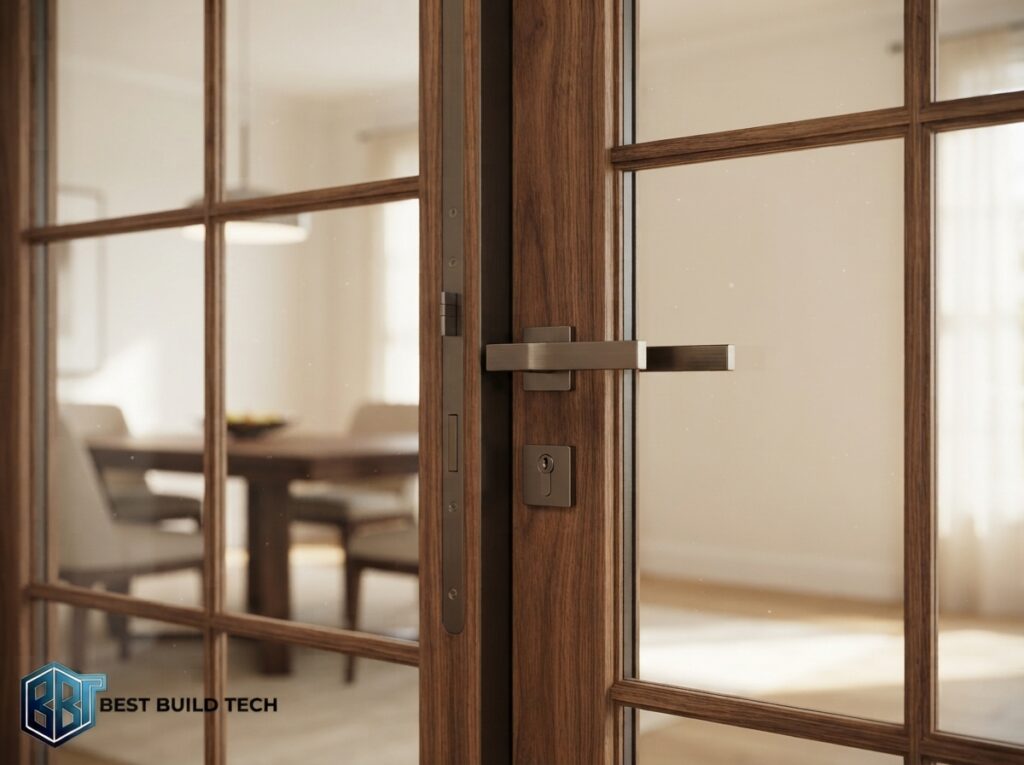
A homeowner in Thousand Oaks called me last month after a contractor quoted her a project for “French doors” that, once she saw the spec sheet, looked nothing like what she had in mind. That mix-up happens more than you’d think. French doors get used as a catch-all term for almost any hinged, glass-heavy door, when there’s actually a lot of nuance in how they’re built, how they swing, and what makes one version hold up better than another. Here’s the version of that conversation I end up having with most homeowners.
Where the Classic French Door Look Comes From
The defining feature of a French door isn’t the glass, it’s the pair. Two hinged panels, opening from the center, is what gives French doors their symmetrical, formal look, something closer to a traditional double door than to a track-based sliding system. That’s part of why they’ve stayed popular for interior openings, dining rooms, and front-facing rooms where the look matters as much as the function.
In-Swing or Out-Swing? It’s a Bigger Decision Than It Sounds
This is the detail that catches people off guard. An out-swing French door opens away from the room, which keeps the interior floor space clear but means the door needs unobstructed exterior space to swing into, patio furniture and planters included. An in-swing door does the opposite, and works better on covered patios or tighter exterior spaces, but it eats into your interior layout when open. We walk this through room by room before finalizing a design, because it’s genuinely easy to get wrong on paper and only notice once the door is installed.
The Hardware Details That Actually Matter
Two French doors sitting next to each other in a showroom can look nearly identical and still perform completely differently once installed. The multi-point locking hardware, the quality of the hinges, and how the panels seal against each other in the center are what actually determine whether the door stays weathertight and operates smoothly for years. It’s not the most visually interesting part of the decision, but it’s the part that matters most after the first year.
Where French Doors Make the Most Sense
French doors tend to shine in spaces where you want a defined, classic look and don’t need the widest possible opening, think home offices, dining rooms, or a front entry with a secondary access point. For a wide-open patio connection, a sliding or folding system usually makes more sense, but for the right room, French doors bring a character that those other styles don’t quite replicate.
You can see the configurations we install on our French doors page. If you want to look at hardware and finish options in more detail before your consultation, our sister company, Eris Home Products, carries the same product line.
Frequently Asked Questions
Are French doors less secure than other door styles?
Not when built with quality multi-point locking hardware. Security has more to do with the hardware and installation quality than with the door style itself.
Can French doors be used for exterior patio access?
Yes, they’re a common choice for patio and backyard access, particularly in rooms where a moderate opening and a classic look are priorities over a full-width connection.
Do French doors come in different sizes?
Yes, panel width and height can be adjusted to fit your specific opening, and we measure this precisely during the planning phase of any project.
How do I decide between in-swing and out-swing?
It comes down to your interior layout and what’s on the exterior side of the door. We’ll walk through both options with you based on your specific space.
Talk Through Your Project
If you’re weighing French doors against other options for an upcoming project, it’s worth having a real conversation about swing direction, hardware, and where the style actually fits best in your home before you commit to anything.
Contact Best Build Tech at (805) 375-6333 or visit bestbuildtech.com to get started.
READ MORE: