
Construction Material Wholesaler: 5 Stages of a Door Order, From Spec to Delivery
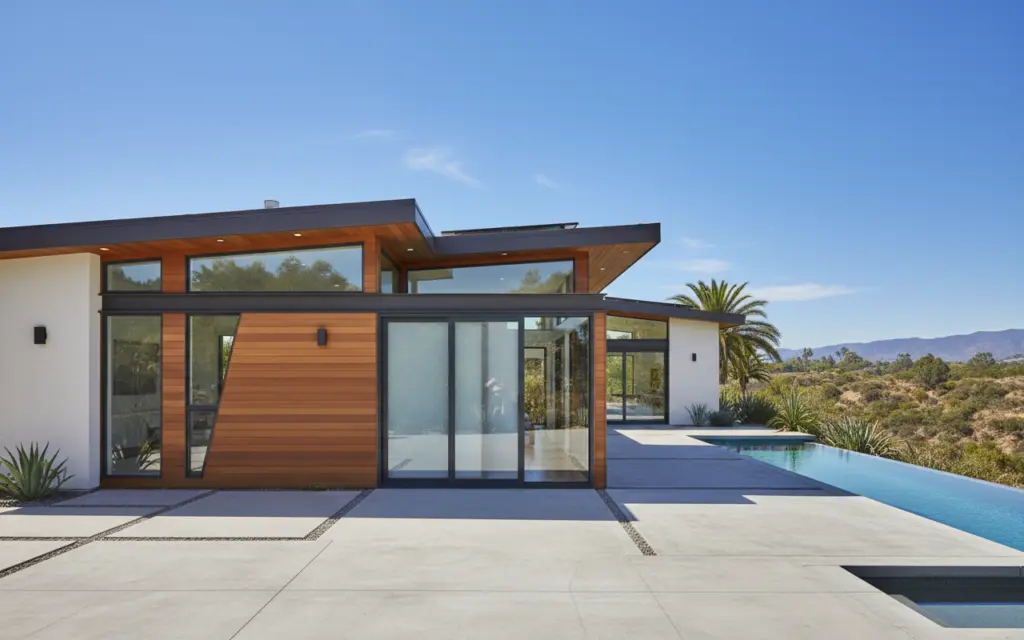
Ask most contractors where a door project goes wrong and they’ll point to installation day. In my experience, it goes wrong earlier, usually at the ordering stage, over a spec sheet nobody read closely. Working with a construction material wholesaler sounds simple on paper: you pick a product, place an order, and it shows up. But doors and windows don’t behave like lumber or drywall. They’re sized to a specific opening, built with specific hardware, and almost impossible to swap out once they arrive. After more than 15 years in this business in Thousand Oaks, I’ve watched the same handful of decisions make or break a project, so I’m walking through them here in the order they actually happen.
What a Construction Material Wholesaler Means for Doors and Windows
In the broadest sense, a construction material wholesaler supplies the building products that go into a home or commercial project, as opposed to a company that only handles the finished remodel. For homeowners, that category can feel abstract. For doors, it gets very concrete very quickly, because the product you order has to match the structure it’s going into.
That’s the part that surprises people. A pallet of studs can be trimmed on site. A large aluminum door system generally cannot. Many systems are built to the dimensions of your opening, with the frame finish, glass, and hardware decided before anything is produced. So when someone searches for a construction material wholesaler in the Conejo Valley, what they usually need isn’t just a product. They need someone who can help them order the right product the first time.
Whether you’re a homeowner running your own remodel, a designer specifying finishes, or a builder working through a punch list, the same five stages apply.
Stage 1: Define the Opening Before the Product
The most common ordering problem I see is starting with a product photo instead of a measurement. A homeowner falls in love with a wide folding door system, then discovers the wall can’t accommodate the stacked panels, or that a structural beam sits where the opening would need to go.
Start with the opening itself:
- How wide and tall is it today, and could it realistically change?
- Is the wall load-bearing, and has anyone confirmed what the header can support?
- What’s on either side of the opening, such as furniture, a patio cover, or a nearby corner?
- How level are the floor and the sill?
Those answers decide which products are even on the table. A newer home in Dos Vientos Ranch with a clean, engineered opening is a very different starting point than an older ranch-style layout in Casa Conejo, where walls and floors may have settled over the decades. Neither is a problem, but each calls for a different conversation.
Stage 2: Choose the Door System That Fits the Use
Once the opening is understood, the system choice gets much easier. I find it helps to think about how often the door will be used, and how much of the wall you want to disappear.
Sliding doors suit moderate openings and everyday traffic. They’re simple, they don’t swing into your space, and they leave a clean sightline when closed. You can see the styles we work with on our sliding doors page.
Folding doors and bifold doors are for homeowners who want the widest possible opening. The panels fold and stack to one or both sides, which can open most of a wall to the backyard. Our folding door page covers the configurations in more detail.
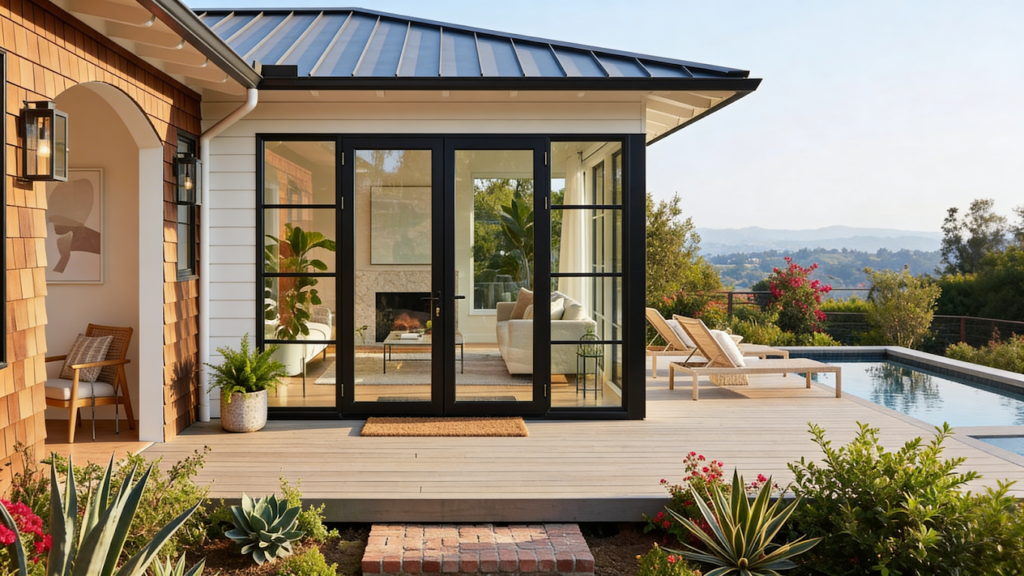
French doors bring a classic, symmetrical look and a straightforward swing, and they tend to fit best where you want character over sheer width. Our French doors page shows the options.
Aluminum framing runs through all three. It holds its shape under Southern California sun, allows slimmer frame profiles, and asks very little of you in maintenance, which is why it’s the material I usually recommend for aluminum patio doors and exterior openings around here. If you’d like to browse finishes and panel layouts at your own pace, our sister company, Eris Home Products, shows its bifold range online.
Stage 3: Put the Specs on Paper
This is the stage that separates smooth projects from stressful ones. Before anything is ordered, every decision that affects the final product should be written down and agreed on. At a minimum, I want the following confirmed:
- Exact dimensions of the opening, and how they were measured.
- Configuration: number of panels, which ones operate, and which way they open or stack.
- Frame finish and color, ideally from a physical sample rather than a screen.
- Glass type, since it affects comfort, noise, and sun exposure.
- Hardware: handle style and locking system.
- Threshold type, especially if accessibility matters in your household.
On glass, it’s worth a few minutes to read the U.S. Department of Energy’s guidance on windows and doors, which explains how glass and framing choices relate to energy performance. It won’t make the decision for you, but it helps you ask better questions.
One habit I’d encourage: if anything on the spec sheet is unclear, ask before you approve it. Once a custom door is in production, “I assumed it meant something else” is an expensive sentence.
Stage 4: Plan for Lead Time, Delivery, and Receiving
Doors and windows rarely arrive the day after you order them, and large systems take planning to receive. Two practical points are worth raising early with whoever is supplying your materials.
Timing. Ask for a realistic window and what could move it. Your remodel schedule, including demolition, framing, stucco, and flooring, should be built around the door, not the other way around. I’ve seen more than one project stall because the opening was ready months before the product was.
Receiving. A large aluminum system is heavy and glass-heavy. Know where it will be stored, keep it protected from weather and foot traffic, and inspect it when it arrives, before anyone signs off. Look at frame finish, glass, and hardware while the delivery is still in front of you. It’s far easier to address a problem the day something arrives than three weeks later.
Stage 5: Installation and the Final Walkthrough
A well-made door can still underperform if it isn’t installed carefully. Leveling, sealing, and proper support all affect how smoothly it operates and how long it lasts, and they matter just as much as the product itself.
When the work is done, do a real walkthrough rather than a quick glance. Open and close every operable panel. Lock and unlock each one. Run your hand along the seals. Check that the threshold sits the way you expected. If something feels off, say so then. A good installer would rather adjust it on the spot than hear about it later.
Why Local Knowledge Still Matters
It’s tempting to treat building materials as interchangeable, but where your home sits genuinely changes the recommendation. Sun exposure on a west-facing wall in Thousand Oaks is a different challenge than a shaded opening in Santa Rosa Valley. Homes in Westlake Village and Oak Park often involve hillside lots and larger glass areas. Newbury Park and Camarillo have a wide mix of older and newer construction, each with its own quirks.
Along the Highway 101 corridor and out through the surrounding neighborhoods, I talk with homeowners from every one of these communities, and the conversation almost always starts the same way: what does the space look like today, and how do you want to use it? Good answers to that question beat any catalog.
Mistakes Worth Avoiding
- Ordering from a photo instead of a measurement. The product has to fit the opening, not the other way around.
- Skipping the stacking-space check on folding and bifold systems.
- Choosing hardware last. Handles and locks are what you touch every day.
- Letting the schedule drive the spec. Rushing an order is how mistakes get built into the product.
- Assuming every door is interchangeable. Sliding, folding, and French doors solve different problems.
Frequently Asked Questions
What does a construction material wholesaler do?
A construction material wholesaler supplies building products, such as doors, windows, and related components, for residential and commercial projects. For homeowners, the practical value is getting the right product matched to the right opening, with clear specs before anything is ordered.
Do I need to be a contractor to ask about door materials?
No. Homeowners, designers, and builders all have the same basic questions about sizing, systems, and timing, and our team is glad to talk through your project whichever role you’re in.
Which door type is best for a wide patio opening?
For the widest opening, folding and bifold doors are usually the strongest choice. For a moderate opening with simple everyday use, sliding doors often make more sense. French doors work well where a classic look matters more than width.
Why is aluminum so common for exterior doors in Southern California?
Aluminum resists warping under sun and heat, supports slim frames that maximize glass, and needs little upkeep, all of which matter in our climate.
How should I prepare before requesting information on a door project?
Have the approximate size of the opening, a few photos, and a rough idea of how you want to use the space. That’s enough to start a useful conversation.
Do you work with homeowners outside Thousand Oaks?
Yes. We hear from homeowners across the Conejo Valley, including Newbury Park, Westlake Village, Camarillo, Santa Rosa Valley, Casa Conejo, Dos Vientos Ranch, and Oak Park.
Start a Conversation About Your Project
If you’re planning a remodel, an addition, or a new build and want to get the door and window decisions right the first time, we’d be glad to talk it through. Tell us about the opening, the look you’re after, and your timeline, and we’ll help you sort out which system fits. A few minutes of planning now saves a lot of rework later.
Reach out to Best Build Tech through bestbuildtech.com to start the conversation, and take a look at the aluminum French and single door options at Eris Home Products if you’d like to see more styles beforehand.
Best Build Tech
2300 Corporate Center Dr, Thousand Oaks, CA 91320, United States
805-375-6333