
Casement Window Soundproofing: Is Double-Pane Glass Enough?
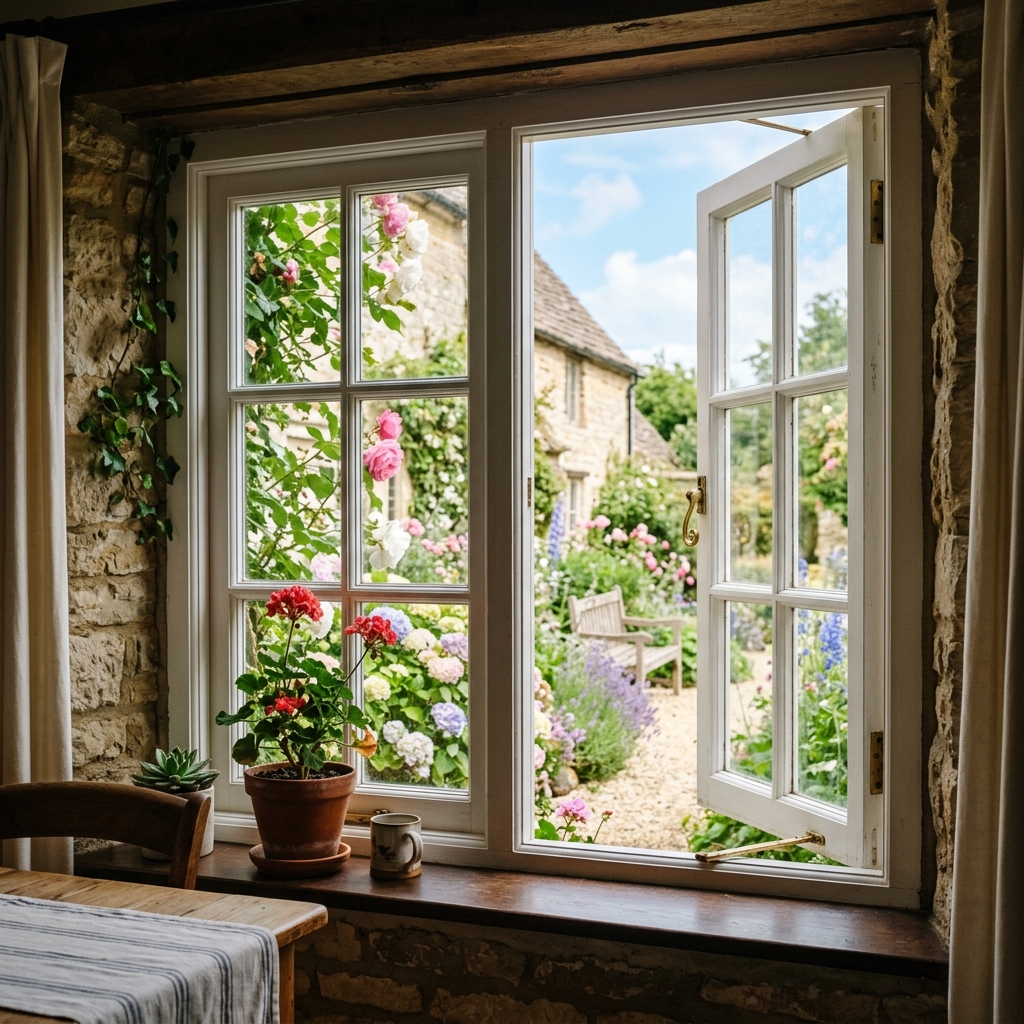
A casement window is often the first choice for homeowners in bustling Los Angeles neighborhoods who are seeking a reprieve from the constant hum of city life. Whether you are dealing with the rhythmic transit noise of the 101 freeway or the leaf blowers of a busy suburb, acoustic comfort is a top priority. This leads to a critical question during the window replacement process: Is double-pane glass enough for soundproofing?
The answer depends on the frequency of the noise you are trying to block and the structural design of the window itself. While double-pane glass is a massive upgrade over older single-pane units, true “soundproofing” requires a combination of glass density, specialized interlayers, and the airtight compression that only specific window styles can provide.
How Double-Pane Glass Affects Acoustics
To understand if double-pane technology is “enough,” we have to look at the physics of sound. Sound travels in waves, and those waves lose energy every time they have to pass through a different medium.
The “STC” Rating Explained
In the window industry, sound control is measured by the Sound Transmission Class (STC). A standard single-pane window has an STC of about 26. A standard double-pane unit increases that to roughly 28–32. While this sounds like a small jump, the STC scale is logarithmic; a 10-point increase can represent a 50% reduction in perceived noise. For many quiet residential streets in the Conejo Valley, this level of protection is often sufficient.
The Limitation of Symmetric Glass
The weakness of standard double-pane glass is that both panes are usually the same thickness. When sound waves hit two identical panes, they can vibrate at the same frequency—a phenomenon called “resonance.” This allows certain low-frequency noises, like a rumbling truck or a bass-heavy stereo, to pass through the glass relatively easily.
Beyond the Glass: Why Structure Matters
You can have the thickest glass in the world, but if the window frame doesn’t seal perfectly, sound will leak in through the air gaps just like water. This is why the casement window is considered the gold standard for acoustic performance.
The Compression Seal Advantage
Unlike sliding or double-hung windows that rely on weatherstripping that “rubs” together, a casement window operates on a hinge. When you crank the window shut, the entire sash is pressed firmly against the frame’s gasket. This creates a high-pressure compression seal. Because sound is essentially air in motion, if air cannot get through the seal, the majority of the noise cannot get through either.
Multi-Point Locking Systems
High-quality casement units feature multi-point locks that pull the window tight at the top, middle, and bottom. This uniform pressure ensures there are no microscopic gaps around the perimeter. For homeowners in high-traffic L.A. corridors, this structural seal is just as important as the glass itself for achieving true interior silence.
Upgrading for Maximum Silence
If double-pane glass alone isn’t meeting your needs—perhaps you live near LAX or a major construction site—there are “super-insulation” options that can be integrated into your frames.
- Laminated Glass: This involves a thin layer of Polyvinyl Butyral (PVB) sandwiched between two layers of glass. PVB is a dampening material that “absorbs” sound vibrations rather than letting them pass through.
- Dissimilar Glass: By using two panes of different thicknesses (e.g., a 3mm pane and a 5mm pane), you break the resonance frequency, making the window effective at blocking a wider range of noise levels.
- Argon Gas Fills: While primarily used for thermal insulation, the dense argon gas between the panes also helps slow down sound waves more effectively than standard air.
Conclusion: The Quiet Home Solution
Is double-pane glass enough for soundproofing? For the average home, a high-quality double-pane unit installed in a casement window frame will provide a noticeable and satisfying reduction in environmental noise. However, if you are looking for absolute tranquility, upgrading to laminated or dissimilar glass within that same airtight casement structure is the ultimate solution. By combining the right glass technology with the best sealing window design, you can transform your Los Angeles home into a peaceful sanctuary.
Create Your Silent Sanctuary
Ready to block out the noise and enjoy a quieter home? Best Build Tech specializes in high-performance acoustic installations across Los Angeles. Our team can help you select the perfect glass and frame combination to meet your specific soundproofing needs.
Best Build Tech 📍 2300 Corporate Center Drive, Thousand Oaks, CA 91320 📞 805-375-6333 —