
Are Folding Doors Better Than Sliding Doors?
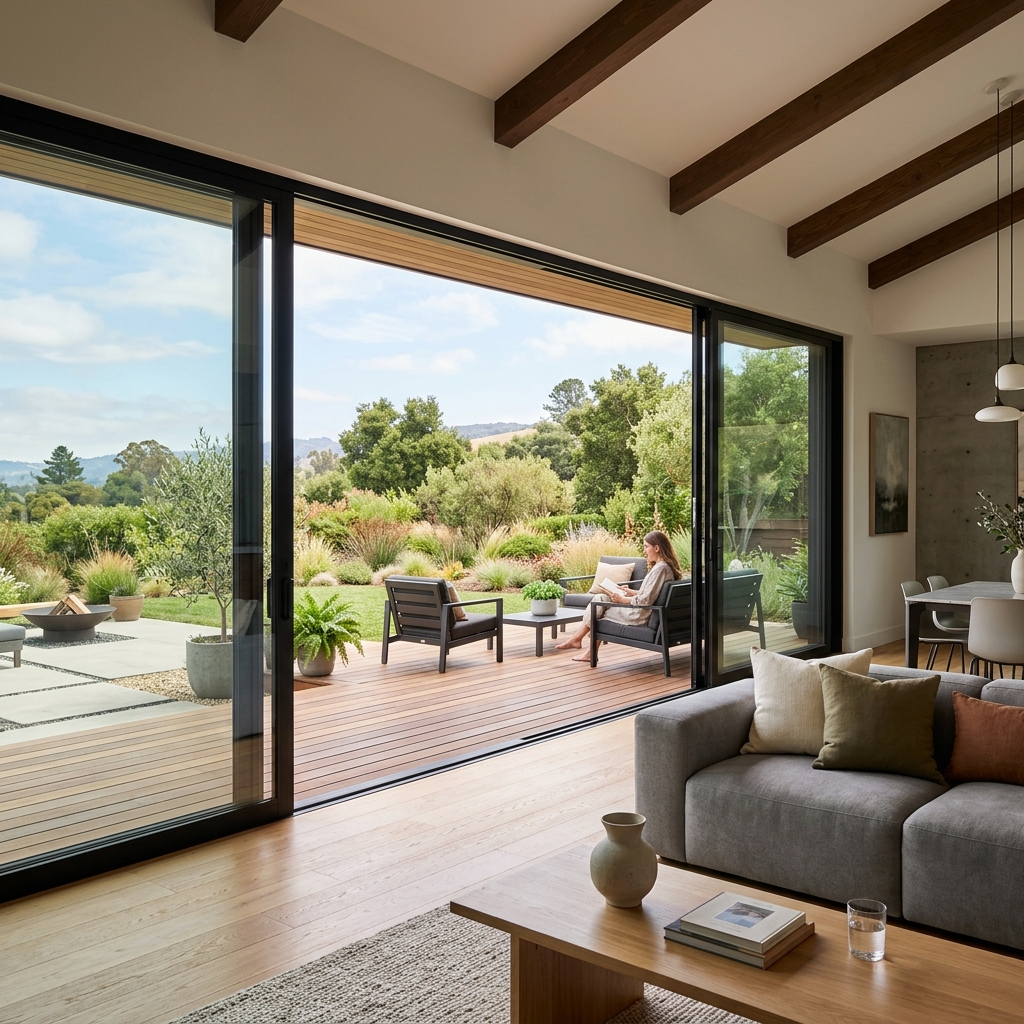
Folding doors and sliding doors are the two most popular choices for homeowners in Thousand Oaks and Westlake Village looking to create a seamless transition to their outdoor living spaces. As modern architecture pushes for larger glass spans and “disappearing” walls, a common debate arises during the design phase: Are folding doors better than sliding doors? The truth is that “better” is subjective and depends entirely on your specific architectural goals, your available space, and how you intend to use the opening. While folding doors offer an unrivaled 95% clear opening, sliding doors provide massive, unobstructed panes of glass that offer a cleaner view when closed.
In this comprehensive guide, we will break down the mechanical differences, the lifestyle benefits, and the structural requirements of both systems to help you decide which is the superior fit for your Los Angeles County home.
The Case for Folding Doors: Maximum Ventilation
The primary reason a homeowner chooses a folding door (often called a bifold) is the desire for a total transformation of the wall.
The “Wall-to-Wall” Opening
Unlike a sliding door, where at least one pane must remain in the opening (unless it is a pocket system), folding doors fold back like an accordion. This allows you to open up nearly the entire width of the frame. For homes in Calabasas or Agoura Hills that feature expansive patios or outdoor kitchens, this creates a truly integrated indoor-outdoor experience that is perfect for entertaining.
The “Daily Access” Swing Door
Many people worry that they have to fold the entire system just to let the dog out. However, premium folding doors can be designed with a “lead” or “daily access” door. This panel operates independently like a standard swinging door, giving you quick access to the backyard without moving the entire glass wall.
The Case for Sliding Doors: Uninterrupted Views
While folding doors win on the opening width, sliding doors often win on the aesthetic of the glass itself.
Slimmer Sightlines
Because folding doors consist of multiple narrow panels connected by hinges, there are more vertical “frames” (sightlines) interrupting your view when the doors are closed. Sliding doors can utilize massive panes of glass—sometimes up to 10 feet wide per panel—with incredibly slim frames. If your home in Malibu or the Hollywood Hills overlooks the ocean or the city lights, a sliding system provides a “picture window” effect that folding systems cannot replicate.
Space Efficiency
A folding door requires a “stacking zone” either inside or outside the house where the folded panels sit. If you have a narrow balcony or furniture placed near the opening, this stack can get in the way. Sliding doors operate entirely within their own track, making them the more space-efficient choice for smaller footprints in areas like Sherman Oaks.
Structural and Maintenance Considerations
Both systems represent high-end engineering, but they interact with your home’s structure differently.
- Header Requirements: Most high-quality folding doors are “top-hung,” meaning the entire weight of the glass hangs from the beam above. This requires a significant structural header to prevent sagging.
- Track Maintenance: Sliding doors rely on bottom rollers that must be kept clear of grit to prevent “flat-spotting.” Folding systems involve more moving parts, including multiple sets of hinges and complex locking points, which may require more frequent alignment checks in the shifting soils of the San Fernando Valley.
- Weather Sealing: Historically, sliding doors were considered more “airtight” due to the way the panels interlock. However, modern architectural folding doors now feature high-compression seals that meet or exceed the same weather-tightness ratings.
Q&A: Folding vs. Sliding Doors
Q: Which system is more secure against intruders? A: Both systems are highly secure when built by premium manufacturers. Folding doors typically feature a multi-point locking system on every other panel, effectively “bolting” the wall into the floor and header. Sliding doors utilize anti-lift blocks and heavy-duty hook locks. Both are formidable barriers when equipped with tempered or laminated glass.
Q: Are folding doors more expensive than sliding doors? A: Generally, yes. Because folding doors require more hardware (hinges, multiple locking mechanisms, and specialized rollers) and more complex installation labor, they often carry a higher price point than a standard sliding system of the same size.
Q: Can I put a screen on a folding door? A: Yes, but it requires a specialized “pleated” or “retractable” screen system. Sliding doors can often use a standard sliding screen, which is simpler and less expensive to replace if damaged.
Q: Which is easier to operate for seniors or children? A: Modern sliding doors with “lift-and-slide” technology are incredibly easy to move. However, a well-balanced folding door with a top-hung track also moves with very little resistance. The “lead door” on a folding system often makes it easier for daily use by children than sliding a large, heavy glass panel.
Conclusion: Making the Final Choice
Are folding doors better than sliding doors? If your goal is to host large gatherings and completely remove the barrier between your kitchen and your deck, folding doors are the superior choice. If you prioritize a minimalist aesthetic with the largest possible panes of glass to frame a world-class view, a sliding door will likely serve you better.
For the homeowner in Thousand Oaks or Los Angeles, the decision often comes down to the “60/40 rule”: If you plan to have the doors open 60% of the time, go with folding. If the doors will stay closed 60% of the time to preserve the view and the AC, go with sliding.
Find Your Perfect Fit with Best Build Tech
Whether you are leaning toward the expansive opening of folding doors or the sleek lines of a sliding system, Best Build Tech is here to guide you. We provide expert consultation and precision installation across Thousand Oaks, Westlake Village, and the greater Los Angeles area. Our team ensures that whichever system you choose, it is installed to the highest structural and safety standards.
Best Build Tech 📍 2300 Corporate Center Drive, Thousand Oaks, CA 91320 📞 805-375-6333
Call us for a folding vs. sliding door comparison at your home!